Kente Graduation Stoles: Heritage, Design, and How to Order
Kente graduation stoles have become a meaningful part of commencement ceremonies for many graduates, particularly Black students celebrating cultural heritage alongside their academic achievement. Ordering them right means understanding what the patterns represent, sourcing authentic-feeling material, and respecting the cultural origin while still building a stole that fits a modern graduation. This guide walks through the heritage, the design, and the practical ordering details.
The Cultural Origin of Kente
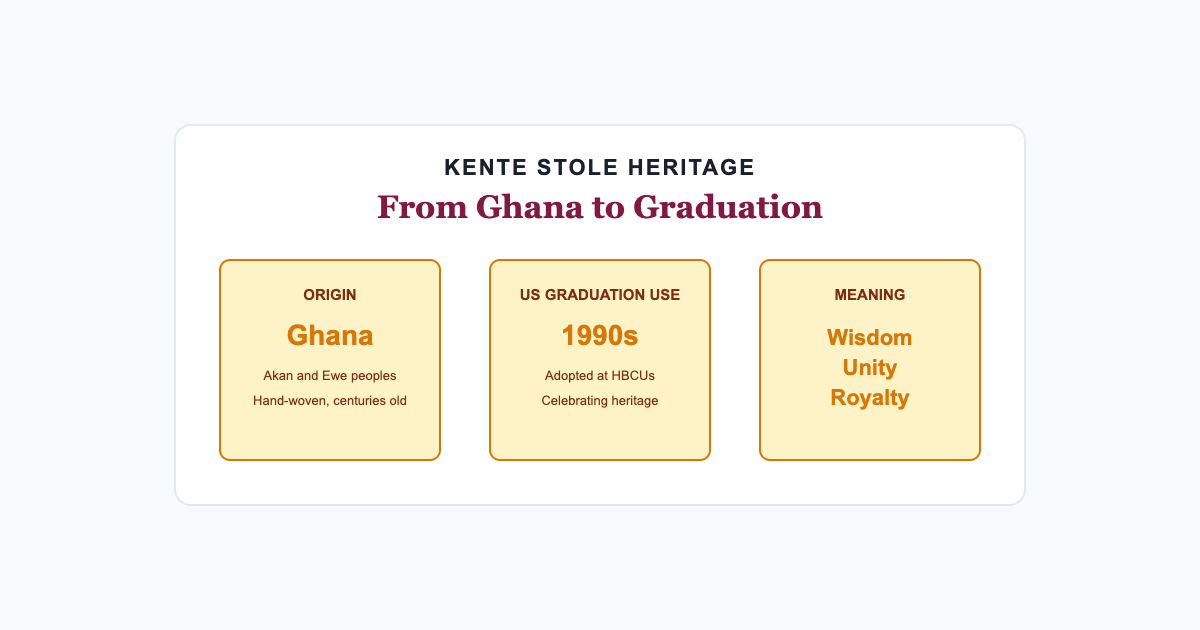
Kente cloth is a hand-woven fabric originating with the Akan and Ewe peoples of Ghana, dating back several centuries. Each pattern, color combination, and motif traditionally carries specific meaning — representing values like wisdom, royalty, harmony, courage, or unity. The cloth historically signified status and ceremonial occasion.
In the United States, Kente cloth came to be associated with graduation ceremonies starting in the 1990s, particularly at Historically Black Colleges and Universities (HBCUs) and predominantly Black student organizations. Wearing Kente at commencement became a way for graduates to honor heritage alongside the formal regalia.
For schools and student groups offering Kente stoles today, the design choice is best made with awareness of the cultural roots — choosing patterns and colors with intention rather than as a generic decoration.
Common Kente Patterns and Colors
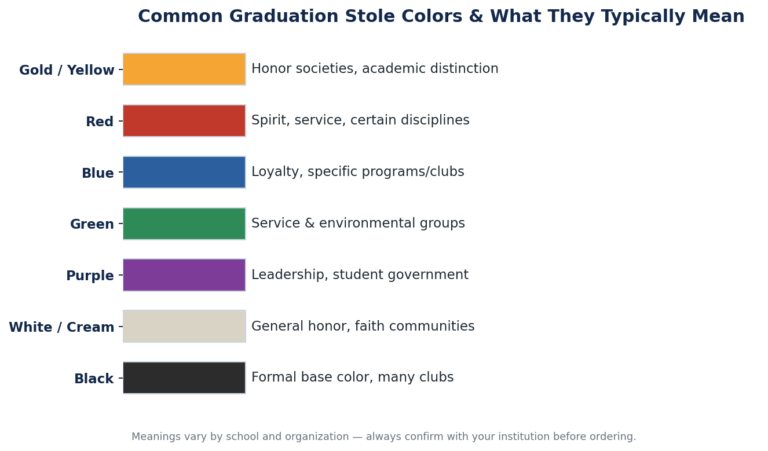
The most recognizable Kente colors are gold, green, red, and black, often with white or yellow accents. Gold typically symbolizes royalty, wealth, and high status. Green represents growth, harvest, and renewal. Red signifies sacrifice and political vigor. Black symbolizes maturation and intensified spiritual energy.
Pattern names matter too. Adwinasa is the “all motifs are exhausted” pattern, signifying excellence and creativity. Sika Futuro is “gold dust,” representing wealth and elegance. Many schools and student groups consult with cultural advisors before committing to a specific pattern for their stoles.
For a graduating class ordering 30–100 Kente stoles, picking one pattern that resonates with the group’s identity is more meaningful than rotating patterns randomly. Consult before deciding.
Heritage Grad Stole Construction
True hand-woven Kente cloth is a craft product, made on traditional looms in narrow strips that are then sewn together. Authentic Ghanaian Kente is expensive and time-intensive — not realistic for a 100-stole graduation order at a school’s typical budget.
What most schools order today is a Kente-printed stole — a satin or polyester base with the Kente pattern reproduced through high-resolution printing. The result honors the design tradition without claiming to be hand-woven, and the price point makes a class-wide order feasible.
For schools that want a step closer to authenticity, a Kente-jacquard option uses woven (rather than printed) reproduction of the patterns, on a heavier base fabric. The cost is roughly 2–3x a printed Kente stole, but the look and feel are more substantial.
Sourcing With Cultural Awareness
If you’re ordering Kente stoles for an HBCU class, a Black student union, or a student of African heritage requesting a personal stole, the practical advice is: choose patterns deliberately, not by what looks good in a thumbnail. Consult with a cultural advisor or student leader who can speak to the meaning of specific designs.
For our customers, we offer Kente-printed stoles in several traditional pattern families. We don’t claim our printed stoles are hand-woven authentic Kente — they’re respectful reproductions made for graduation ceremonies. The printed approach makes them accessible to schools and student groups that want to offer the option without the cost of hand-woven sourcing.
Ordering Logistics for a Class
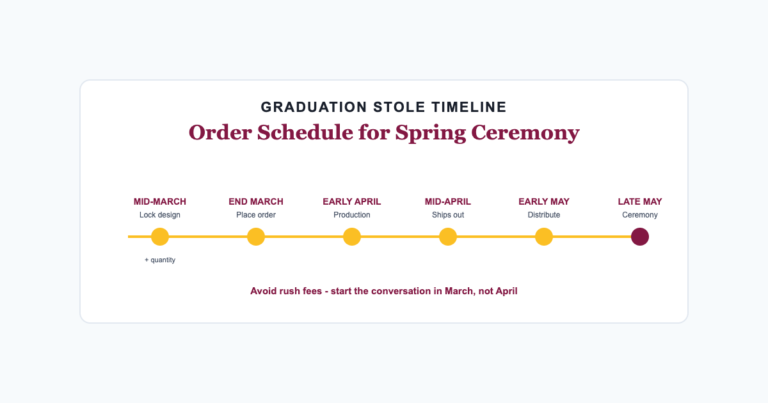
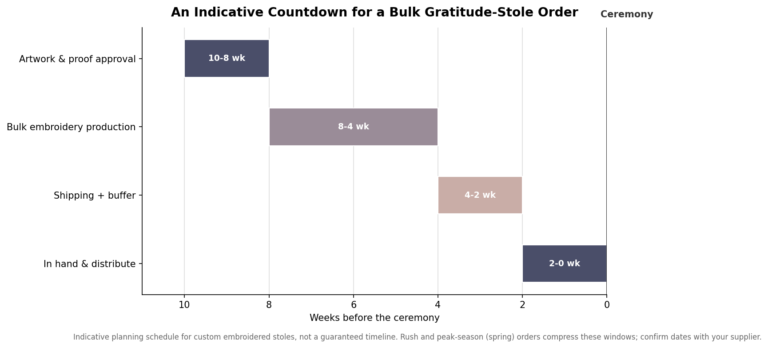
Place Kente stole orders 8–12 weeks before commencement, same as standard satin stoles. Production timelines are similar — 10–14 business days for orders of 50–200 stoles, plus shipping.
Sizing follows the same convention as other graduation stoles — 60 inches in length and 5–6 inches wide is standard adult sizing. Most adults from 5 feet to 6 feet 4 inches wear that length comfortably.
If your school offers a class-wide stole order plus an optional Kente stole for students who want one, consider running them as two separate orders: the standard class stole for everyone, the Kente stole as an opt-in add-on with a sign-up form. That way the budget stays predictable and only students who actively want a Kente stole order one.
Reorder Considerations
Once we have your design (whether Kente-printed, Kente-jacquard, or a custom variant) on file, reorders for next year’s class or for late additions ship in 5–7 business days. The cultural context doesn’t change year over year, so the design typically stays consistent.
Want to offer Kente stoles for your graduating class? Request a quote with your preferred pattern, color combination, and quantity. We’ll work through the design respectfully and ship a stole your graduates will be proud to wear.