Honor Cord vs Stole vs Sash: Graduation Regalia Compared
Honor Cord vs Stole vs Sash: Graduation Regalia Compared
Cords, stoles, sashes, and hoods all hang from a graduation gown — and they all mean different things. The honor cord vs stole question shows up every spring as graduates and ceremony coordinators try to figure out which piece of regalia goes with which honor, which Greek life designation, and which cultural organization. This guide pins down the differences, the standard dimensions, and the traditions that govern each piece.
The five pieces of graduation regalia
Most ceremonies use five categories of regalia layered over the academic gown: cap tassels (worn by everyone), honor cords (academic honors), stoles (Greek life, cultural orgs, military service), sashes (cultural orgs, special programs), and hoods (graduate degrees). Each piece carries its own length, fabric, and traditional meaning.
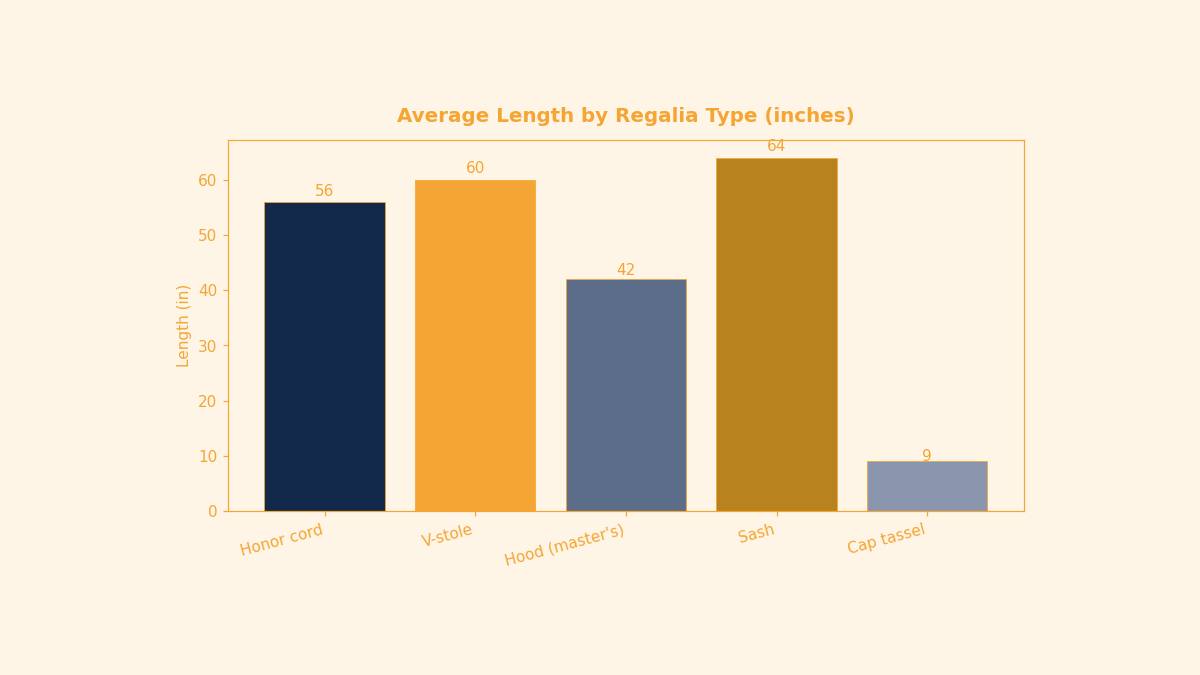
The chart above maps average length in inches. Honor cords run about 56 inches with knotted ends. Stoles run about 60 inches as a V-shaped drape over the shoulders. Hoods are physically smallest at 42 inches but visually largest because of their shape. Sashes run longest at roughly 64 inches; cap tassels are the smallest piece at 9 inches.
Who awards which regalia
The matrix above maps regalia type to award source. Academic honors programs (Latin honors, departmental honors, honor societies) typically award cords. Greek life and cultural organizations typically award stoles and sashes. Military service members wear specific stoles or sashes based on branch. Graduate degree programs use hoods to indicate degree level (master’s hoods are shorter than doctoral hoods).
Single piece vs layered regalia
Most graduates wear two to four pieces at once — a tassel, an honor cord, and one or two organization stoles. Universities publish layering guidelines; the typical order from inside out is hood (if applicable), then stoles, then honor cords, then sashes. When in doubt, follow the campus regalia coordinator’s published order.
Fabric and finish quality
Stoles ship in four common fabrics. Polyester satin is the workhorse — affordable, photographs cleanly, and survives the day without wrinkling. Bridal satin is the upgrade — slightly heavier weight, deeper sheen, and a more luxurious feel against the gown. Twill is matte and feels academic. Knit is rare but used for some athletic and cultural stoles. Velvet is the premium choice for special-honor stoles and tends to be hand-finished.
Embroidery and applique
Most stoles are embroidered with the organization’s logo and the graduate’s year. Greek life stoles often add the graduate’s name across the bottom band. Cultural stoles frequently feature appliqued symbols (kente cloth patterns, indigenous designs, religious symbols). Confirm the design requirements with the awarding organization before placing the order — restrictions on logo placement vary.
Honor cord traditions
Honor cords are typically braided cords with knotted ends. Single-color cords represent specific honor societies (gold for Latin honors, silver for graduate honors, multi-color for departmental honors). Some universities allow multiple cords; others limit to one or two. Cords drape over the shoulders with the knot ends hanging at chest level.
Stole vs sash distinction
Stoles drape symmetrically — both ends hang in front. Sashes drape diagonally — one end over the shoulder, the other across the body. In practice, the terms are used loosely, but on a procurement order the distinction matters because the cut pattern and length differ.
Buying for the graduation party
If you’re ordering regalia for a group (a sorority, an honor society, a graduating cohort), plan for an order timeline of at least 8-10 weeks before graduation. Embroidery adds two weeks to standard production. Bulk orders past 25 units typically unlock 15-25% per-unit savings.
Common errors
Three errors are most common. First, ordering a sash when the organization expects a stole (or vice versa) — confirm the cut style before placing the order. Second, ordering with the wrong school colors — verify school colors against the university’s official brand guide, not memory. Third, ordering too late — embroidery and bulk production combined need 8+ weeks for clean delivery.
Bottom line
The honor cord vs stole decision comes down to who awarded it. Academic honors → cord. Greek life or cultural org → stole. Special program or cultural org → sash. Graduate degree → hood. Match the regalia to the award source, layer them in the campus-approved order, and the graduate walks in regalia that reads correctly to family, faculty, and future employers.
Ready to spec your graduation stoles? Use our stole builder, browse in-stock colors, or read our guide on stole production timelines.