How to Get Wrinkles Out of a Graduation Stole Without Damaging It
A custom graduation stole spends weeks folded in a poly bag before it ever reaches a graduate’s shoulders, and it shows up creased. The instinct is to reach for a hot iron and press the wrinkles flat, and that instinct ruins more stoles than any shipping mishap. Most custom stoles are made from polyester satin, and polyester satin is one of the least heat-tolerant fabrics in a typical closet. Treat it like a cotton shirt and you get permanent shine, glazed patches, or an actual melted spot that no amount of care will reverse.
None of this means stoles are fragile. It means the safe method looks almost nothing like ordinary ironing. Here is how to get a stole ceremony-ready without damaging it, and why the usual approach backfires.
Know what your stole is made of first
Before any heat touches the fabric, identify the material, because the whole approach depends on it. The large majority of custom-decorated graduation stoles are polyester satin, chosen because it holds bright dye, drapes well, and takes embroidery and printing cleanly. A smaller number are silk, which behaves differently and costs more, and some ceremonial and honor stoles are velvet, which cannot be pressed flat at all without crushing the pile. If you are working from a bulk order for a school or group, assume polyester satin unless the specification sheet says otherwise, and check whether any of the stoles carry embroidery or a printed panel, since decorated areas need to be kept away from direct heat entirely.
Why a hot iron is the fastest way to ruin a satin stole
The problem is a mismatch between where an iron’s dial sits and where synthetic fabric fails. Standard garment-care guidance puts the maximum safe pressing temperature for polyester at about 110°C (230°F), the single-dot setting, and silk sits in the same low band around 100 to 110°C. Cotton and linen, by contrast, are pressed at 180 to 230°C. So the “normal” hot setting most people default to is running at roughly double the temperature polyester is rated for.
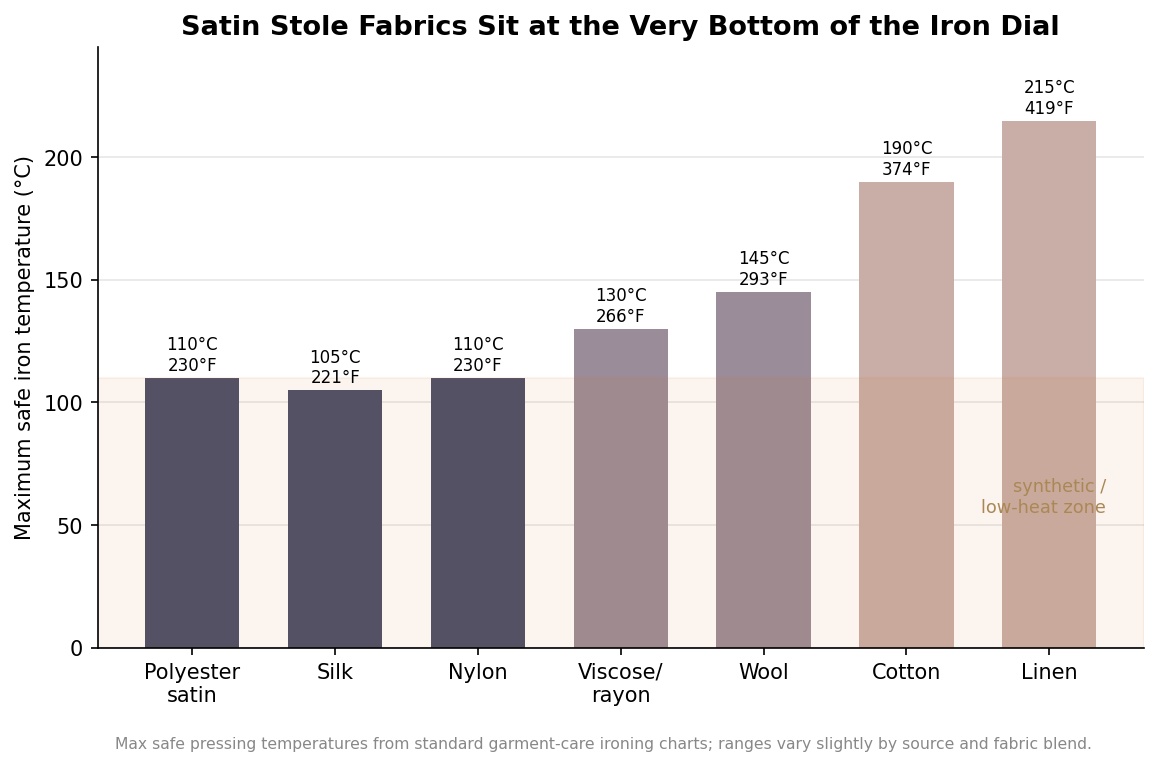
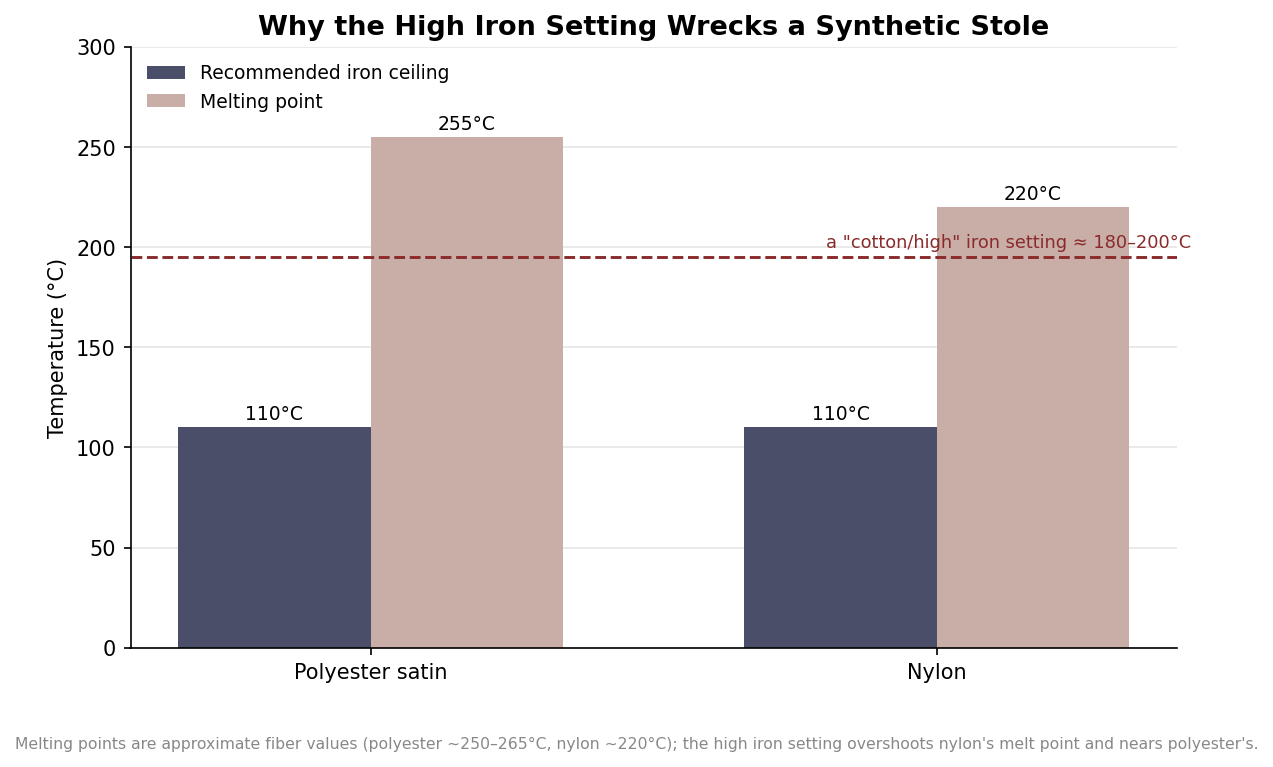
What happens above that ceiling is not gradual. Polyester starts to soften well before it melts, so even a setting in the middle of the dial can flatten the satin’s surface texture and leave a permanent glossy sheen where the iron pressed. Push higher and you reach the point where the fiber genuinely melts, around 250 to 265°C for polyester and near 220°C for nylon. A typical cotton or “high” iron setting of 180 to 200°C already overshoots nylon’s melting point and sits uncomfortably close to polyester’s. That is the whole danger in one sentence: the setting that makes quick work of a dress shirt is hot enough to deform or melt the exact fabric your stole is made of.
Steam does not rescue you here either. Silk and many satins are marked “no direct steam,” because a burst of hot steam can spot or water-mark the surface. The heat that removes a wrinkle and the heat that damages the fabric are separated by a much thinner margin than on natural fibers, which is why the technique has to change rather than just the temperature.
The low-risk way to press a satin stole
If you do press, work cool, slow, and shielded. Set the iron to its lowest synthetic or single-dot setting and let it reach temperature before you start; never begin on a hot setting intending to “be quick about it.” Turn the stole inside out so you are pressing the reverse side, and lay a pressing cloth — a thin cotton dish towel or a piece of muslin — between the iron and the satin so the metal never touches the fabric directly. Keep the iron moving in short passes rather than resting it in one place, and stay well clear of any embroidered or printed area, which should be pressed from the back if at all. Test an inconvenient corner first, such as the tip that tucks behind the neck, so that if the setting is wrong you find out somewhere no one will see.
A simpler and safer option for polyester satin is often to skip the iron entirely. Because polyester relaxes at fairly low heat, many creases fall out if you hang the stole in a bathroom while a hot shower runs, letting the ambient steam do the work without any contact. Give it fifteen to twenty minutes and a gentle downward smoothing by hand, and light shipping creases usually disappear.
Steam, don’t press, for velvet and delicate stoles
Velvet is a different animal. Its look comes from a raised pile, and an iron flattens that pile permanently, leaving crush marks that read as damage under ceremony lighting. Velvet and other pile or heavily textured stoles should be refreshed with a handheld garment steamer held a few inches away, never touching, with the stole hanging vertically so gravity helps the wrinkles drop. Move the steam head down the length of the stole and let the fabric dry hanging before you handle it. The same held-at-a-distance steaming works well for silk stoles that you would rather not risk under an iron at all, and it avoids the water-spotting risk of pressing steam directly into the weave.
Handling and storing a group order so it arrives ready
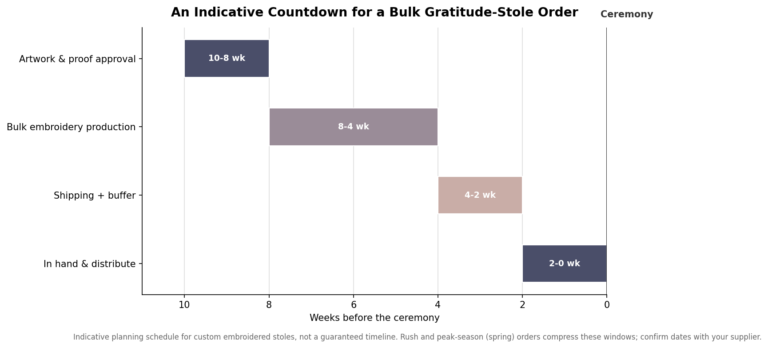
For a school or organization ordering dozens of stoles, the smartest wrinkle strategy is to avoid setting the wrinkles in the first place. Unbox the order as soon as it arrives rather than leaving stoles compressed in their bags until the morning of the ceremony; given a day or two hanging on a rod, polyester satin relaxes a surprising amount on its own. Where you must store or transport them, roll each stole loosely rather than folding it, since a hard fold crease is far harder to remove than the soft waves of a roll, and hang them individually once on site. Build a buffer of a couple of days into your timeline specifically for de-wrinkling and touch-ups, because the one moment you cannot safely rush is heat on satin.
Handled this way, even a stack of stoles that arrived tightly packed will look crisp on stage without a single scorch mark. The rule to remember is simple: the fabric that takes bright colors and clean embroidery so well is also the fabric that melts at settings you would never think twice about, so the lowest heat, a pressing cloth, and a little patience beat a hot iron every time.